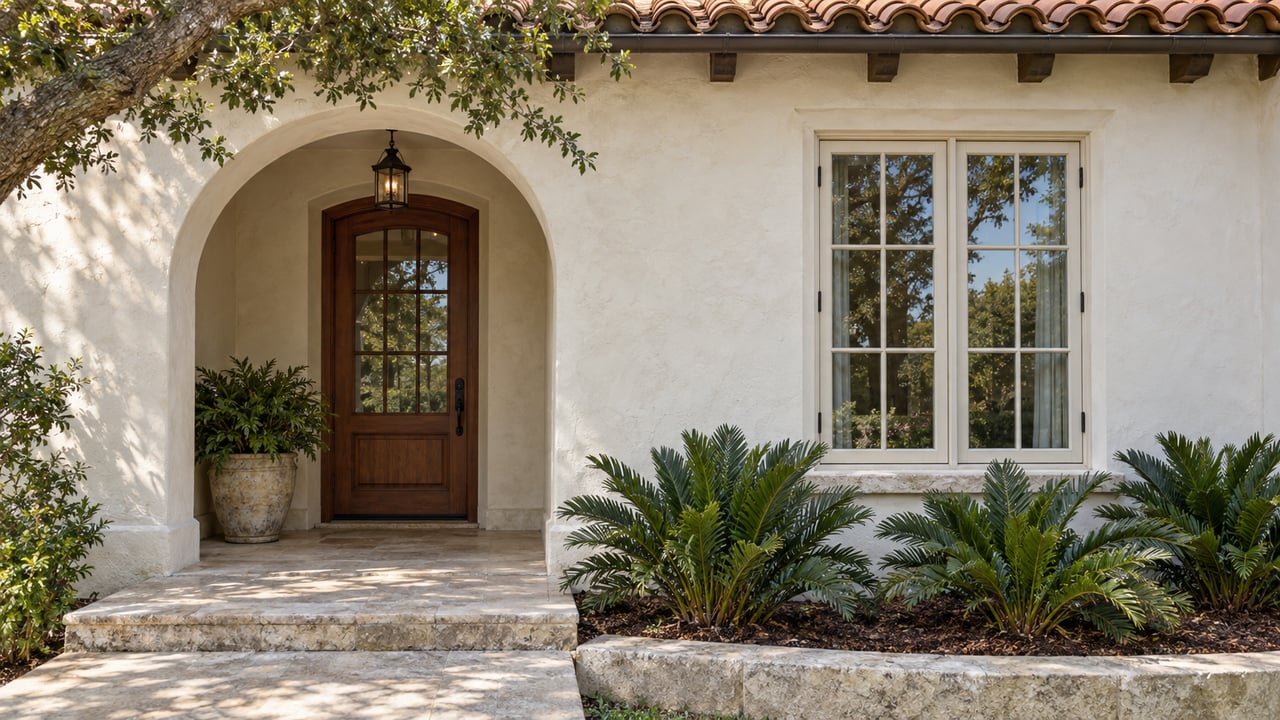
A 12,190-square-foot Mediterranean-style compound on Via Tuscany closed for $13 million in March 2026, according to a report in GrowthSpotter. It was, by that report's count, the sixth sale above $10 million ever recorded in Winter Park. The home sat on more than two acres along Lake Maitland, with two detached garages connected to the main house by breezeways and a 700-square-foot cabana by the pool.
That sale says something true about Winter Park's oldest streets: they carry value that the rest of the market can't manufacture. It does not say what a buyer on one of those streets is actually free to do with the house once they own it. That answer depends on something the listing photos never show: which specific block the home sits on, and what era built it.
Two buyers can both write "charming older Winter Park home" on their must-have list and end up with completely different renovation realities. One buys on a brick street in Olde Winter Park and discovers the wall she wants to remove is carrying the roof. Another buys a block over on a mid-century street and finds the same wish list solved with a single engineered beam. A third buys newer estate stock east of the lakes and never encounters a review board at all. The price per square foot might look similar on paper. The path to the kitchen she actually wants is not.
Three Streets, Three Different Renovations
Winter Park's housing stock did not arrive in one wave. It came in at least three, and each one built differently enough that a contractor pricing a remodel treats them as separate problems, not variations on a theme.
The oldest layer is Olde Winter Park and the brick-paved streets that include the Vias, Via Tuscany, Via Lugano, and Via Capri among them, running along Lake Knowles and into the Lake Maitland shoreline. This is 1920s-through-40s Mediterranean Revival and Colonial stock: plaster walls, load-bearing masonry, and galley kitchens built before anyone expected them to open into a great room. A design-build firm that works this territory regularly, KBF Design Gallery, describes opening one of these homes as structural work more often than almost anywhere else they build. Walls that look like simple partitions are frequently carrying load, which means an engineered beam and a real load path have to be designed before demolition, not after.
The second layer sits around Interlachen and the Kenilworth-area streets: classic mid-century ranches with low ceilings and chopped floor plans. These renovate differently. According to the same design-build firm, one correctly sized beam is usually all that stands between the existing plan and an open sightline to the back of the house, and a bedroom nobody uses is often where the primary suite comes from.
The third layer is newer: estate footprints east of the lakes and around Windsong, arriving builder-finished with open plans already in place. The renovation conversation here is a specification pass, cabinetry, stone, lighting, rather than a structural one.
None of these three tell you which one you're buying just from the sale price or the square footage. They tell you from the street name.
| Street Type | Construction Era | What Contractors Typically Find | Review Layer Before Exterior Changes |
|---|---|---|---|
| Olde Winter Park, the Vias, Isle of Sicily | 1920s-40s Mediterranean and Colonial | Load-bearing plaster and masonry behind what looks like a partition wall | Historic Preservation Board Certificate of Review, if designated a contributing structure |
| Interlachen, Kenilworth | Mid-century | A single engineered beam usually opens the back of the house | None, unless individually designated |
| East of the lakes, Windsong | Builder-finished estate stock | Open plans already in place; work is mostly cosmetic | None |
What "Contributing Structure" Actually Changes
Historic designation in Winter Park is an overlay on top of existing zoning, not a separate set of rules that override it, and the city's own preservation office is explicit that designation does not obligate an owner to restore anything or make any changes at all. If you buy a 1930s home on a brick street and never touch the exterior, the designation sits quietly in the property file and changes nothing about how you live in the house.
The moment you want to add a room, move a window, or change a roofline on a contributing structure, a third party enters the project: the Historic Preservation Board. The city's Certificate of Review process governs additions and alterations to designated properties, and the board itself meets on the second Wednesday of each month at 9 a.m. in the City Hall Commission Chambers on South Park Avenue. Miss the submission window for that month's meeting and the project waits until the next one. The guidance from the board is that new additions should sit on secondary facades and stay in scale with the existing architecture, which is a workable constraint for most projects but a real one for a buyer who assumed a front-facing expansion was simply a permit away.
Winter Park has recorded more than 700 historic structures, which the city estimates at roughly 7 percent of residential dwellings citywide. That is a meaningful share of the market, but it also means the majority of homes, including most of the mid-century stock around Interlachen and Kenilworth, carry no such review layer even when they sit inside the same zip code as a designated property two streets over.
What This Means If You're Comparing Properties
A buyer comparing two similarly priced older Winter Park homes is really comparing two different renovation timelines, and the difference rarely shows up until after closing. Before writing an offer on a home built before 1950, it's worth asking the listing agent whether the property is individually designated or sits inside a historic district, and whether it has been identified as a contributing structure to that district. That single answer determines whether an exterior change needs a Certificate of Review or just a standard building permit.
It's also worth asking a contractor to look at the specific walls involved in your renovation wish list before assuming a floor plan can open up the way it might on a newer build. A 1920s house that finally gives up the wall between the kitchen and the dining room often takes the load path with it, which means the fix is an engineered beam and, in some cases, a licensed structural engineer's seal rather than a weekend project. That's not a reason to avoid the older stock. It's a reason to price the renovation with the structure in mind rather than against a generic remodel budget.
Permitting jurisdiction adds one more variable. Some Winter Park addresses file through the city's own Building Division; surrounding pockets file through Orange County instead. Which one applies is a function of the address, not the neighborhood name, so it's worth confirming before a project timeline gets built around the wrong department.
A Few Direct Questions
Does owning a historic home in Winter Park force me to renovate a certain way? Not if you leave the exterior alone. Designation is an overlay on existing zoning, and the city does not require owners to make changes or restore anything. The Certificate of Review process applies when you want to alter or add to a designated structure, not simply because you own one.
Are all older homes on the Vias or in Olde Winter Park under Historic Preservation Board review? Not automatically. Review applies to properties formally designated on the Winter Park Register of Historic Places or sitting within a designated historic district as a contributing structure. Age alone doesn't trigger it, which is why confirming designation status before writing an offer matters more than guessing from the build year.
How long does the Certificate of Review process typically add to a project timeline? It depends on the scope of the request, but the practical constraint is the meeting calendar. The board meets once a month, so a submission that misses the window for that cycle waits for the next one. Building that into the renovation schedule from the start avoids treating it as a surprise delay later.
If you're evaluating an older Winter Park property and want a clear read on what a specific street, and a specific house, will actually let you do with it, Danholm Collection can walk through the designation status, the structural realities, and the review path before you're deciding it all under contract.
