A Gotha closing can look finished two weeks before it is. The offer is accepted, the appraisal comes in at value, the general home inspection turns up nothing worse than a cracked driveway paver and an aging water heater. Then the well and septic reports land, and the timeline the buyer built their moving truck around quietly falls apart.
This isn't bad luck. It's the predictable result of a fact that rarely makes it onto a listing sheet: Gotha sits inside Orange County's Rural Service Area, and Orange County's own planning guide is direct about what that means. Public water and wastewater service is generally not provided in the Rural Service Area. In a neighborhood built around large lots and a protected rural character, that isn't a footnote. It's the reason nearly every home in Gotha runs on a private well and a private septic system instead of a municipal line, and it's why the well and septic reports, not the general inspection, are the documents that actually decide whether a Gotha closing holds its date.
Why There's No Line to Tap Into
Gotha has been a designated Rural Settlement and historical preservation district since 1995, and that status was never a marketing choice. Orange County's own planning reference names Gotha as one of only five communities in the county carrying that designation, alongside Christmas, Clarcona, Tangerine, and Zellwood, specifically to preserve historic rural character. The same guide states plainly that in the Rural Service Area surrounding those settlements, "the existence of publicly owned facilities... is not intended to encourage utility connection for rural properties." Growth centers and planned developments like Horizon West are built to receive that infrastructure. Gotha generally is not.
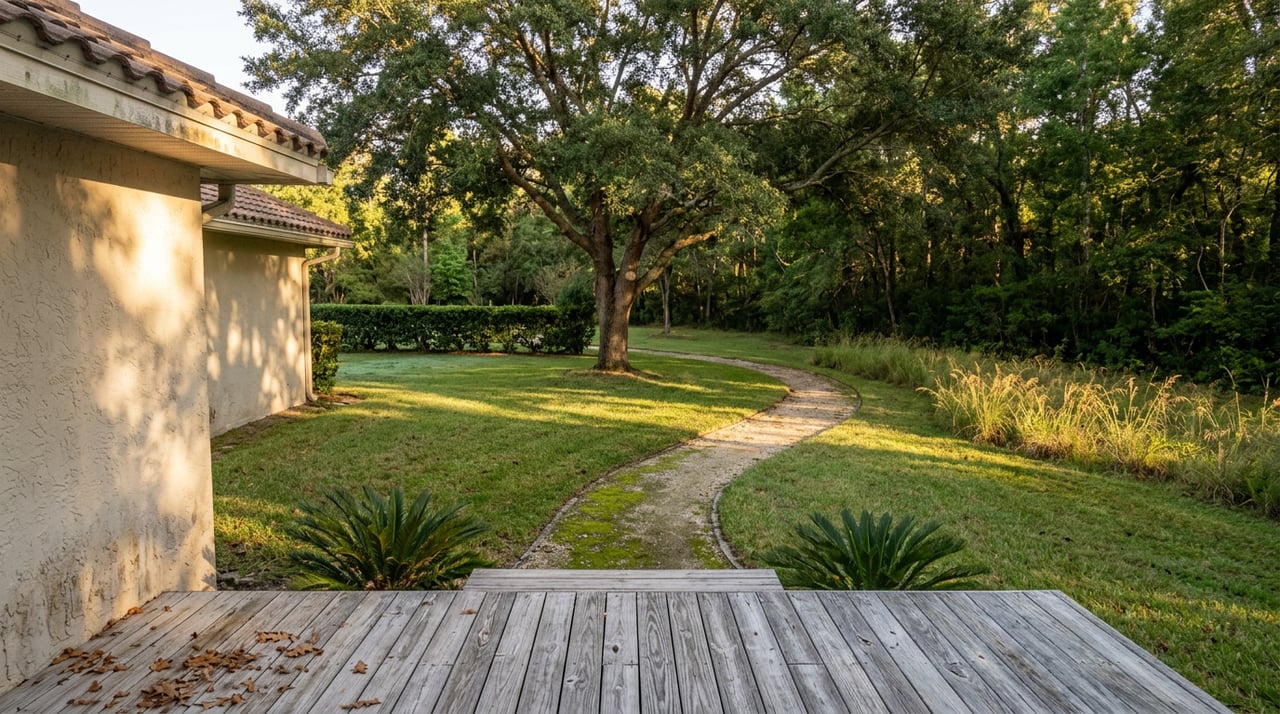
That's the tradeoff buyers are actually purchasing when they choose Gotha over Windermere or Winter Garden: the large lots and tree canopy that define the neighborhood exist in part because the infrastructure that would support denser development was never extended here. The well and the septic tank aren't a downgrade from municipal service. They're the load-bearing feature of the zoning that keeps Gotha from looking like its neighbors.
What Lenders Check Before Closing
According to Septic and Well, Florida has no state law requiring a septic inspection at the point of sale. That surprises a lot of buyers moving in from states with mandatory county health department sign-offs before closing. But the absence of a state mandate doesn't mean the inspection is optional in practice.
According to Quality Filters and Pumps, both loan types call for water testing at minimum, typically coliform bacteria and nitrates, before the lender will clear the loan to close. VA loans go further, often requiring documentation that the well sits an adequate distance from the septic system. Since a meaningful share of buyers moving to Gotha are relocating professionals financing their purchase rather than paying cash, this is not a fringe scenario. It's the default path for a large share of Gotha transactions.
Florida's own setback rule adds a second layer that has nothing to do with financing and everything to do with the land itself. Any part of a septic system, tank or drain field, has to sit at least 75 feet from a private drinking water well under Florida Statute 381.0065 and the accompanying state rule. On a standard suburban lot that distance is easy. On an older Gotha parcel where the well was drilled decades before anyone thought to measure it against a modern setback table, it isn't always a given, and confirming it is part of what a proper well and septic inspection is actually checking for.
What the Numbers Actually Protect You From
The inspection itself is cheap. What it protects against is not.
| Item | Typical Cost |
|---|---|
| Well system inspection (licensed contractor) | $150–$350 |
| Water test panel, basic (bacteria, nitrates) | $75–$150 |
| Water test panel, expanded (arsenic, VOCs, lead) | $200–$450 |
| Septic inspection (pump and evaluate) | $250–$600 |
| Well pump replacement | $1,500–$3,000 |
| Failed drain field replacement, conventional system | $5,000–$15,000 |
| Full septic system replacement, mound or ATU | $12,000–$30,000+ |
The gap between the top rows and the bottom rows of that table is the entire argument for ordering both inspections early rather than treating them as a formality that happens to fall inside the due diligence period. A buyer who skips the well test to save $200 and later discovers bacterial contamination isn't looking at a $200 problem. They're looking at a delayed closing, a shock chlorination and re-test cycle, and in the worst case a drain field replacement that costs more than the buyer's entire earnest money deposit.
Orange County has built a partial backstop for sellers facing an aging system. Its Septic Upgrade Incentive Program provides up to $10,000 toward replacing a conventional system with an enhanced, nitrogen-reducing one, and as of March 1, 2025, any repair or modification permit for a system on a lot under an acre triggers that upgrade requirement automatically. One Orange County homeowner described what happens when a system starts failing quietly: pumping that used to happen every five or six years turned into something needed almost monthly before the county grant covered part of the replacement cost. That's the trajectory a buyer's inspection is designed to catch before it becomes the seller's emergency or the buyer's inherited problem.
What Limits a Gotha Lot Split
This same infrastructure reality shows up again the moment anyone tries to divide a Gotha parcel into more than one buildable lot. In an early 2024 rezoning request for an 11.3-acre Gotha property, the applicant asked the county to shift zoning from Restricted Country Estate - Cluster District to Country Estate District specifically to reduce the number of allowable homes from eleven down to four. Requests like this aren't only about density preferences. On a rural, well-and-septic lot, the ground itself puts a ceiling on how many households it can support, long before anyone gets to a conversation about architectural character or lot size minimums.
For a buyer eyeing a large Gotha parcel with an eye toward a future subdivision or an accessory dwelling, this is the first call to make, not the last. The county health department's site evaluation, not the zoning map, is what tells you whether the land can actually support what you're picturing.
What This Means for Your Closing Timeline
A standard 30 to 45 day close assumes the biggest unknowns get resolved inside the inspection period. On unsewered land, that assumption needs a wider margin. A well or septic issue discovered on day 10 of a 14-day inspection period leaves almost no room to get a second contractor out, confirm the diagnosis, and negotiate a remedy before deadlines start expiring.
Before writing or accepting an offer on a Gotha property, it's worth requesting:
- The most recent septic pumping and inspection records, including the permit on file with the county health department
- Documentation of the well's depth, age, and most recent water test results
- Confirmation that the septic system's drain field sits at least 75 feet from every well on the property, not just the primary one
- Any record of repairs, modifications, or upgrades tied to the county's nitrogen-reduction requirements
None of this needs to feel adversarial. It's simply matching the due diligence period to the infrastructure the property actually has, rather than the infrastructure a buyer might be used to from a municipal-utility neighborhood.
A Few Direct Questions
Does Florida require a septic inspection before a home can be sold? The statewide inspection question and loan-related testing are discussed above; most buyers request a septic inspection as part of their own due diligence regardless of loan type.
How do I find out where the well and septic system are located on a Gotha property? The county health department maintains permit records for septic installations, and a licensed contractor can locate a well or tank using probe rods when records are incomplete. Request this information before the inspection period narrows.
Is an older, unpermitted septic system automatically a deal killer? Not automatically. According to Septic and Well, Florida doesn't require existing systems to meet current code unless a major repair or replacement triggers an upgrade. An unpermitted system can often be brought current through the county health department, though that process takes time worth building into a closing timeline.
Gotha's land is the asset. The well and septic system are what let you actually live on it. Getting both right before closing is what keeps the second half of the transaction from undoing the first.
Ready to put a strategy behind your next move in Gotha or the surrounding Butler Chain communities? Danholm Collection can walk you through what a specific parcel's infrastructure actually supports before you write the offer. Book Your Strategy Consultation.
This article is general information, not legal, tax or financial advice. Consult a qualified professional about your situation.
